

Danilo Kalezic
University of Montenegro
Overview:
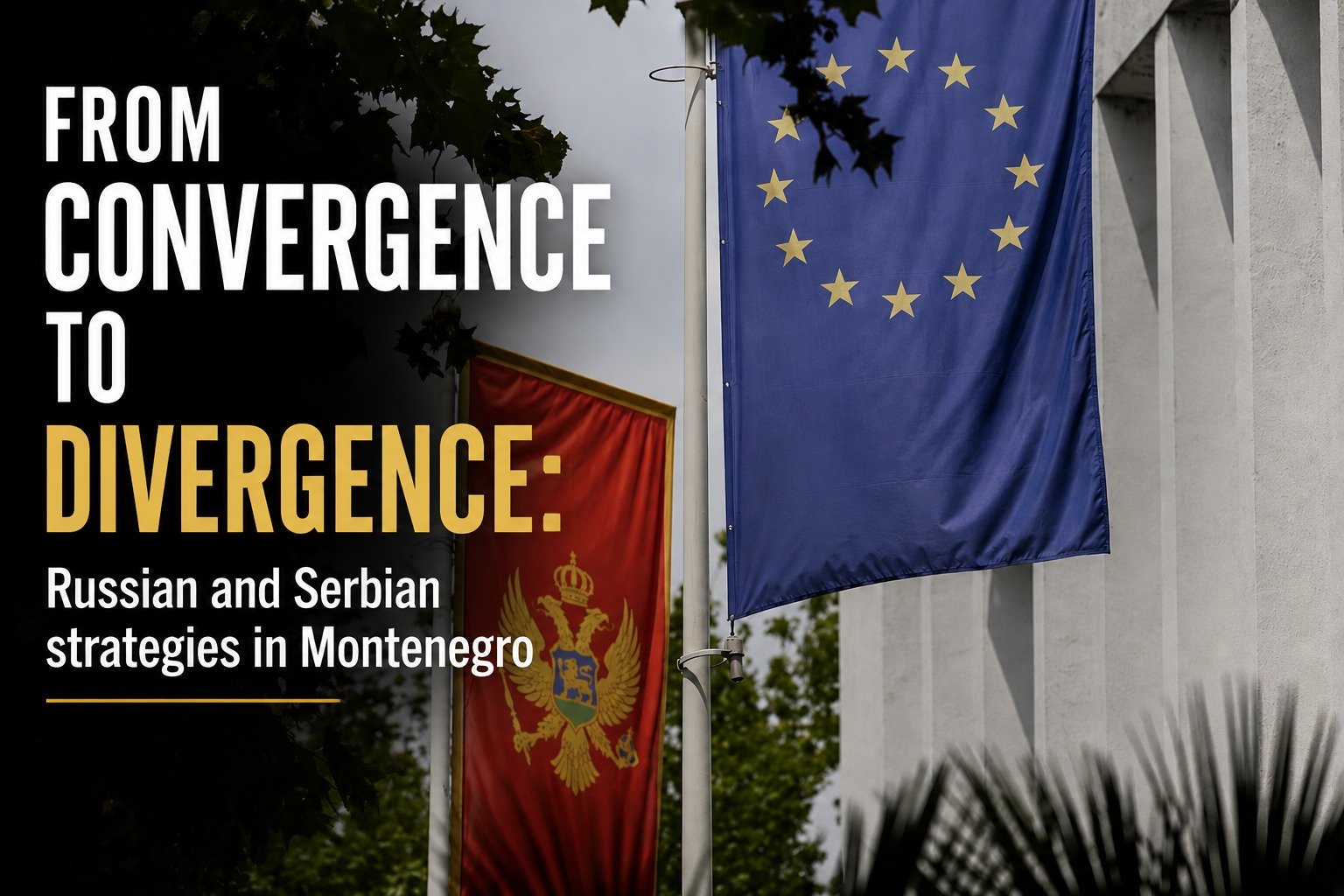
This analysis examines the evolving nature of Russian and Serbian influence in Montenegro and argues that their strategic interests are increasingly diverging as the country advances toward European Union membership. Drawing on the literature on authoritarian diffusion, external anti-democratic influence, and the black knight effect, the paper analyzes how both actors seek to shape Montenegro’s political trajectory. While Russia has historically pursued a strategy of destabilization aimed at preventing Euro-Atlantic integration, it is increasingly incentivized to preserve influence within Montenegro regardless of its eventual accession to the EU, potentially transforming the country into a vehicle for advancing Russian interests from within the Union. Serbia, by contrast, views Montenegro’s successful European integration as a direct challenge to its competitive authoritarian model and regional influence. Consequently, Belgrade is likely to employ a broader range of political, media, religious, and societal instruments to delay or obstruct Montenegro’s accession process.
Foreign Influence and Democratic Vulnerability in Montenegro
The study of democratization in the Western Balkans has increasingly emphasized the role of external actors in shaping domestic political trajectories. While early democratization literature focused predominantly on internal structural and institutional variables, more recent scholarship has expanded the analytical framework to include external influences, both positive and negative (O’Donnell, 1973; Merkel, 1999; Levitsky & Way, 2012). In this context, Russia has emerged as a paradigmatic example of what Ambrosio conceptualizes as a “black knight”—an external actor that actively undermines democratization processes by supporting authoritarian tendencies and destabilizing reform-oriented regimes (Ambrosio, 2009; Tolstrup, 2015). The Western Balkans, and particularly Montenegro and Serbia, provide a fertile empirical setting for examining these dynamics, given their shared historical legacies, transitional political systems, and competing geopolitical orientations (Kalezic, 2022).
Building on this theoretical foundation, the concept of authoritarian diffusion further explains how non-democratic practices and governance models are transmitted across borders. As argued in the literature, authoritarian regimes often collaborate to resist democratization, employing strategies that include insulating domestic systems from external democratic pressure, bolstering allied elites, subverting democratic institutions, redefining norms, and coordinating policies across borders (Ambrosio, 2009; Koesel & Bunce, 2013). These mechanisms are particularly relevant in the case of Russian involvement in the Western Balkans, where the Kremlin has utilized a combination of political, economic, and ideological tools to influence domestic political developments (Kalezic, 2022). The linkage and leverage framework developed by Levitsky and Way provides an additional layer of analysis, highlighting how the density of connections between states and external actors can shape the prospects for democratization (Levitsky & Way, 2010, 2012). In the Western Balkans, the relatively weak linkage to the West and the presence of strong alternative partners such as Russia create conditions conducive to democratic backsliding (Tolstrup, 2013).
Within this broader theoretical landscape, Montenegro represents a critical case study. Since gaining independence in 2006, the country has pursued a strategic orientation toward Euro-Atlantic integration, culminating in NATO membership and ongoing negotiations for accession to the European Union. However, this trajectory has been accompanied by persistent political instability, institutional weaknesses, and external interference. As demonstrated in the underlying study, Russian involvement in Montenegro has been characterized by a combination of subversion and bolstering strategies, aimed at weakening democratic institutions and fostering instability (Kalezic, 2022). These efforts have included election interference, disinformation campaigns, support for opposition parties, and the attempted coup d’état in 2016, all of which have had a detrimental impact on democratic performance across multiple dimensions, including electoral integrity, political rights, and the rule of law (Ambrosio, 2009; Merkel, 2009; Kalezic, 2022).
From Strategic Convergence to Divergence
Historically, Russia’s activities in Montenegro have been closely aligned with Serbian interests, reflecting deep cultural, religious, and political ties between the two countries (MacKenzie, 1996; Antonenko, 2007). Serbia has functioned as a key intermediary and, at times, a proxy for Russian influence, leveraging its extensive networks within Montenegrin society to amplify pro-Russian narratives and support aligned political actors (Kalezic, 2022). This alignment was particularly evident during key political events, such as the anti-NATO protests of 2015 and the subsequent electoral cycles, where Serbian and Russian actors operated in a mutually reinforcing manner (Pomerantsev & Weiss, 2014; Kalezic, 2022). The Serbian Orthodox Church, in particular, has played a central role in this dynamic, serving as both a religious institution and a political actor capable of mobilizing mass support and shaping political discourse (Freeze, 2017).
However, recent developments suggest that this long-standing convergence of interests is giving way to a more complex and differentiated pattern of engagement. Montenegro’s gradual but steady progress toward EU accession has introduced new strategic considerations for both Russia and Serbia, leading to a divergence in their respective objectives and methods. While both actors continue to oppose the full consolidation of liberal democracy in Montenegro, their ultimate goals and operational strategies are no longer identical.
Different Strategic Calculations: Russia and Serbia
For Russia, the evolving geopolitical context has necessitated a recalibration of its approach. Contrary to the assumption that Moscow seeks to prevent Montenegro’s integration into the European Union at all costs, a more nuanced interpretation suggests that Russia may be willing to tolerate, and even indirectly facilitate, Montenegro’s accession under certain conditions. Specifically, Russia’s objective appears to be the transformation of Montenegro into a “Trojan horse” within the EU, a member state that can be leveraged to advance Russian interests from within the institutional framework of the Union. This strategy is consistent with Russia’s broader approach to the EU, which has involved cultivating relationships with member states that exhibit skepticism toward deeper integration and alignment with Western policies, most notably under the leadership of Viktor Orbán (Krekó & Enyedi, 2018).
In this context, Russian interference in Montenegro is likely to persist, but in a more calibrated and targeted form. Rather than engaging in overt and high-risk actions aimed at destabilizing the political system, Russia is expected to focus on maintaining a network of loyalists and proxies within the country’s political landscape. This includes supporting political actors and coalitions that are sympathetic to Russian interests, such as those associated with the former Democratic Front, as well as leveraging media and civil society organizations to shape public opinion (Kalezic, 2022). The goal is not necessarily to secure outright political control, but to ensure that pro-Russian actors remain sufficiently influential to affect key policy decisions, particularly those related to foreign policy and EU alignment. At the same time, Russia’s strategy is informed by practical constraints and shifting priorities. The increasing costs of direct interference, heightened scrutiny from Western actors, and the diversion of resources to other geopolitical theaters have all contributed to a more restrained approach. By adopting a strategy of limited but sustained engagement, Russia can preserve its influence in Montenegro while minimizing the risks associated with more aggressive forms of intervention. This approach aligns with the broader logic of the black knight effect, where the objective is to hinder full democratization rather than to achieve complete regime control (Ambrosio, 2009; Kalezic, 2022).
In contrast, Serbia’s interests in Montenegro are shaped by a different set of incentives, rooted in the logic of competitive authoritarianism. As a regime that combines formal democratic institutions with substantive authoritarian practices, Serbia faces significant challenges in maintaining its political model in the face of external democratic pressures (Levitsky & Way, 2010). Montenegro’s successful accession to the EU would represent a powerful demonstration effect, highlighting the benefits of democratic reform and increasing pressure on Serbia to follow a similar path. This would not only threaten the stability of the incumbent regime but also undermine Serbia’s regional influence.
Consequently, Serbia has a strong interest in delaying or preventing Montenegro’s EU accession, and it is likely to employ a wide range of tools to achieve this objective. These include direct political engagement, support for pro-Serbian parties and coalitions, and the use of media and information campaigns to shape public opinion (Kalezic, 2022). The Serbian Orthodox Church remains a key instrument in this strategy, providing a powerful platform for mobilizing opposition to government policies and reinforcing narratives that emphasize cultural and historical ties with Serbia (Freeze, 2017). The clerical protests associated with the Law on Freedom of Religion in 2019–2020 exemplify how religious mobilization can be used to generate political instability and influence electoral outcomes, thereby disrupting reform processes and EU-oriented policies (Kalezic, 2022).
In addition to these domestic instruments, Serbia also leverages its broader regional and international position to influence developments in Montenegro. This includes economic ties, migration patterns, and diplomatic engagement, all of which contribute to a dense network of interdependence that can be used to exert pressure on Montenegrin authorities (Roberts & Ziemer, 2018). Unlike Russia, whose influence is often mediated through indirect channels, Serbia’s proximity and deep societal connections enable a more direct and sustained form of intervention.
The divergence between Russian and Serbian interests is particularly evident in their respective approaches to electoral interference. While both actors continue to engage in activities aimed at influencing electoral outcomes, the nature and objectives of these interventions differ significantly. Russia’s involvement is likely to be limited to ensuring that pro-Russian actors maintain a presence within the political system, thereby preserving long-term influence (Kalezic, 2022). Serbia, on the other hand, has a much stronger incentive to actively shape electoral outcomes in a way that delays or derails Montenegro’s EU accession. This may involve more aggressive forms of interference, including direct support for specific parties, coordination with religious and civic organizations, and the use of informal networks to influence voter behavior.
Despite these differences, it is important to note that Russian and Serbian strategies are not entirely independent. There remains a degree of overlap and occasional coordination, particularly in areas where their interests coincide. However, the overall trend is one of increasing divergence, driven by the distinct strategic objectives and constraints faced by each actor. Russia’s focus on long-term influence within a potentially EU-integrated Montenegro contrasts with Serbia’s emphasis on preventing such an outcome altogether.
Implications for Montenegro and the European Union
This divergence has significant implications for policymakers in Montenegro and the European Union. It underscores the need for a more nuanced understanding of external influence in the Western Balkans, one that distinguishes between different actors and their respective objectives. Treating Russian and Serbian interference as a monolithic phenomenon risks obscuring the specific mechanisms through which each actor operates and the unique challenges they pose.
The evolving relationship between Russian and Serbian interests in Montenegro reflects broader changes in the regional and international context. While both actors continue to engage in forms of anti-democratic interference, their strategies and objectives have become increasingly distinct. Russia’s approach is characterized by strategic adaptation and a focus on long-term influence within a potentially EU-integrated Montenegro, while Serbia’s strategy is driven by the imperative to prevent such integration and preserve its own political model. Understanding this divergence is essential for developing effective policies to support democratic consolidation and stability in Montenegro and the wider Western Balkans.
References:
Ambrosio, T. (2009). Authoritarian backlash: Russian resistance to democratization in the former Soviet Union. Ashgate.
Antonenko, O. (2007). Russia and Kosovo: Toward a new Balkan strategy. Survival, 49(4), 131–150.
Freeze, G. L. (2017). The Russian Orthodox Church: Politics, culture, and greater Russia. Journal of Eurasian Studies, 8(2), 130–139.
Kalezic, D. (2022). “Black knight” effect: The role of Russia in countering democratization in Montenegro and Serbia (Master’s thesis, Northern Illinois University).
Koesel, K. J., & Bunce, V. J. (2013). Diffusion-proofing: Russian and Chinese responses to waves of popular mobilizations against authoritarian rulers. Perspectives on Politics, 11(3), 753–768.
Kopstein, J., & Reilly, D. (2010). Geographic diffusion and the transformation of the postcommunist world. World Politics, 53(1), 1–37.
Krekó, P., & Enyedi, Z. (2018). Explaining Eastern Europe: Orbán’s laboratory of illiberalism. Journal of Democracy, 29(3), 39–51.
Levitsky, S., & Way, L. A. (2010). Competitive authoritarianism: Hybrid regimes after the Cold War. Cambridge University Press.
Levitsky, S., & Way, L. A. (2012). Linkage versus leverage: Rethinking the international dimension of regime change. Comparative Politics, 38(4), 379–400.
MacKenzie, D. (1996). Serbia and Russia. East European Monographs.
Merkel, W. (2009). Embedded and defective democracies. Democratization, 11(5), 33–58.
O’Donnell, G. (1973). Modernization and bureaucratic-authoritarianism: Studies in South American politics. University of California Press.
Pomerantsev, P., & Weiss, M. (2014). The menace of unreality: How the Kremlin weaponizes information, culture and money. Institute of Modern Russia.
Roberts, S., & Ziemer, U. (2018). Explaining the sources of authoritarian diffusion: Evidence from post-Soviet states. Post-Soviet Affairs, 34(5), 344–364.
Tolstrup, J. (2013). When can external actors influence democratization? Leverage, linkages, and gatekeeper elites. Democratization, 20(4), 716–742.
Tolstrup, J. (2015). Black knights and elections in authoritarian regimes: Why and how Russia supports authoritarian incumbents in post-Soviet states. European Journal of Political Research, 54(4), 673–690.
Zakaria, F. (1997). The rise of illiberal democracy. Foreign Affairs, 76(6), 22–43.